Procedure
Vertebral Body Tethering for Scoliosis
Indications
Selected Adolescents with Idiopathic Scoliosis
Technology
Vertebral Body Screws and a Flexible PET Tether
Cost
USD 20,000–35,000, Depending on Procedure Complexity
.jpg)
What Is Vertebral Body Tethering?
Vertebral Body Tethering, or VBT, is a modern surgical treatment for idiopathic scoliosis in selected children and adolescents. Unlike spinal fusion, VBT uses screws and a flexible tether to correct the curve without permanently fusing the vertebrae. This helps preserve spinal mobility and allows remaining growth to contribute to further correction.
Who Is a Candidate for Vertebral Body Tethering?
VBT may be considered for progressive adolescent idiopathic scoliosis when nonsurgical treatment has not provided sufficient control. Preliminary criteria may include remaining growth, a Cobb angle of approximately 30°–65°, a flexible spinal curve, and no contraindications to surgery. The final decision is made by a scoliosis surgeon after reviewing the X-rays, skeletal maturity, curve flexibility, and the child’s overall condition.
VBT Procedure
What Does the Surgeon Evaluate?
The surgeon assesses the curve type, location and flexibility, Cobb angle, remaining growth, and skeletal maturity. The condition of the vertebrae, previous treatment, spinal balance, and possible contraindications are also considered. When VBT is not suitable, spinal fusion or another treatment may be recommended.
Vertebral Body Tethering vs Spinal Fusion
Preserving Spinal Motion
The vertebrae are not fused into a rigid bone block, allowing more movement to remain in the treated section.
Flexible Correction
VBT uses a flexible tether instead of rigid rods to connect screws along the convex side of the curve.
Continued Growth
In growing patients, further spinal growth may contribute to gradual correction after surgery.
Smaller Incisions
VBT is generally performed through several small incisions on the side of the chest or abdomen rather than a long incision along the back.

Risks of VBT Surgery
Possible risks include tether breakage or loosening, undercorrection, overcorrection, continued curve progression, and screw loosening or displacement. General surgical risks include bleeding, infection, neurological complications, and lung or pleural problems. Some patients may require revision surgery or later conversion to spinal fusion.
When VBT May Not Be Suitable
The patient has little or no remaining growth
The curve is not sufficiently flexible
The scoliosis is severe, rigid, or complex
The curve pattern is unsuitable for tethering
The vertebrae cannot safely support the screws
Neurological or other contraindications are present
Spinal fusion is expected to provide a more predictable result
VBT Procedure
What If VBT Is Not Suitable?
Not being a candidate for VBT does not mean that scoliosis cannot be treated. For many patients, standard scoliosis surgery with spinal fusion may provide a more appropriate and predictable correction.
VBT Clinical Cases in Turkey
An 11-year-old patient had a thoracic curve of 43° and a lumbar curve of 46°. Two years after bilateral VBT, the curves had decreased to 9° and 6°.


Case 2: Left-Sided Thoracoscopic VBT
A 12-year-old patient had a thoracolumbar curve measuring 47.2°. The curve decreased to 17.1° on the first standing X-ray and to 8.3° after three years.


Experienced VBT Surgeons in Turkey
Prof. Dr. Ahmet Alanay
Hospital: Acıbadem Maslak Hospital
Prof. Dr. Ahmet Alanay specializes in pediatric and adolescent scoliosis, kyphosis, and complex spinal deformities. His international training includes spinal deformity research at the University of Kansas Medical Center and a visiting professorship at the UCLA Comprehensive Spine Center.
He is a member of professional organizations including the Scoliosis Research Society and the North American Spine Society. He has participated in international VBT research covering patient selection, skeletal maturity, growth modulation, pulmonary function, and clinical outcomes.
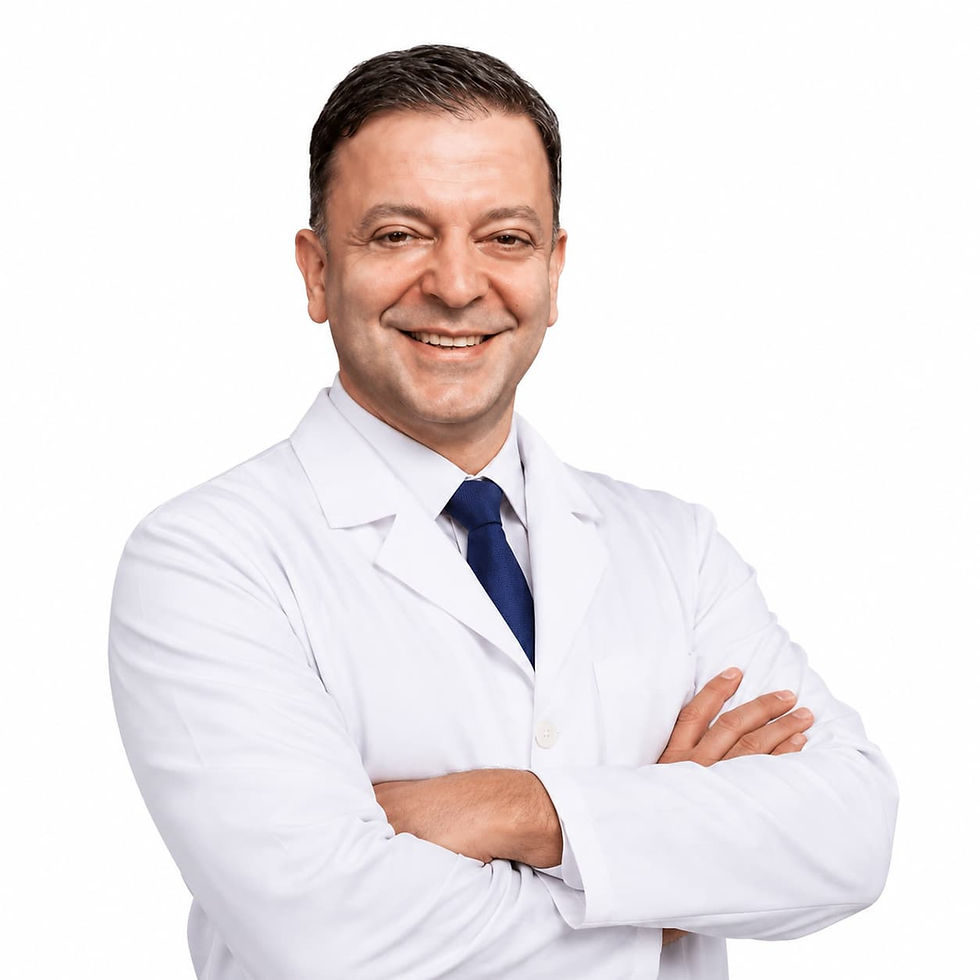
Prof. Dr. Çağlar Yılgör
Hospital: Koç University Hospital
Prof. Dr. Çağlar Yılgör treats spinal deformities in both adults and children, including adolescent idiopathic scoliosis and complex multiplanar deformities. His clinical and academic work covers VBT, spinal fusion, skeletal maturity, spinal balance, and personalized planning for deformity surgery. He has contributed to international VBT studies and participates in the Harms Study Group and the AO Spine Knowledge Forum Deformity.

Prof. Dr. Mehmet Aydoğan
Hospital: Memorial Şişli Hospital
Prof. Dr. Mehmet Aydoğan specializes in scoliosis, congenital and acquired spinal deformities, minimally invasive spine surgery, and fusionless scoliosis treatment. His official clinical profile specifically includes tether-based scoliosis surgery. He previously headed the Advanced Spine Surgery Center at Emsey Hospital and completed research training at the UCLA Comprehensive Spine Center. He has authored clinical studies on thoracoscopic and bilateral vertebral body tethering.

Prof. Dr. Nurullah Ermiş
Hospital: Central Hospital Istanbul
Prof. Dr. Nurullah Ermiş specializes in scoliosis, kyphosis, pediatric orthopedics, and complex spinal deformities in children and adults.
He completed advanced spine surgery training at Ghent University in Belgium and the University of California, San Francisco. His practice includes VBT, standard spinal fusion, minimally invasive spine surgery, navigation, and intraoperative neuromonitoring.

How Much Does VBT Surgery Cost in Turkey?
The cost is calculated after the surgeon reviews the patient’s medical images. The final price depends on the curve type, number of treated levels, implant system, procedure complexity, and hospital. The estimated cost of VBT surgery in Turkey is USD 20,000–35,000. After the preliminary review, the family receives a treatment estimate with a list of included services.
What Is Usually Included?
Preoperative consultations and diagnostics
Laboratory tests
VBT scoliosis surgery
Screws and flexible tether
Intraoperative neuromonitoring
Hospital stay for 5–6 days
Basic physiotherapy
Medical interpreter, transfers and patient coordinator
Follow-up examination before departure
What to Send for a VBT Evaluation
-
Standing full-spine X-ray, front view
-
Standing full-spine X-ray, side view
-
Bending X-rays, if available
-
Spine MRI, if available
-
Orthopedic reports and discharge summaries
-
Previous X-rays showing curve progression
-
The child’s age, height, and weight
-
Information about bracing and previous treatment
Medical images should preferably be sent in DICOM format. When some records are unavailable, send what you have, and the coordinator will explain what else is required.
How VBT Treatment in Turkey Works
Submit the Medical Images
Send the child’s X-rays, MRI scans, and available medical reports for preliminary review.
Surgeon’s Evaluation
The scoliosis surgeon assesses whether VBT is suitable and may recommend another treatment when necessary.
03
Treatment Plan
The family receives a preliminary medical opinion, estimated cost, and travel recommendations.
04
Arrival in Istanbul
The child undergoes an in-person consultation, additional examinations, and final surgical planning.
VBT Surgery
The surgeon corrects the curve using vertebral screws connected by a flexible tether.
Discharge and Follow-Up
The patient begins early recovery and undergoes a follow-up examination before returning home.
Get an Opinion from a Scoliosis Surgeon
Fill Out The Form
Contact Us
Message us anytime. Our coordinators respond within 1 hour.
Online Now
or
Email: info@saulyk.com
Phone: +90 506 801 03 77